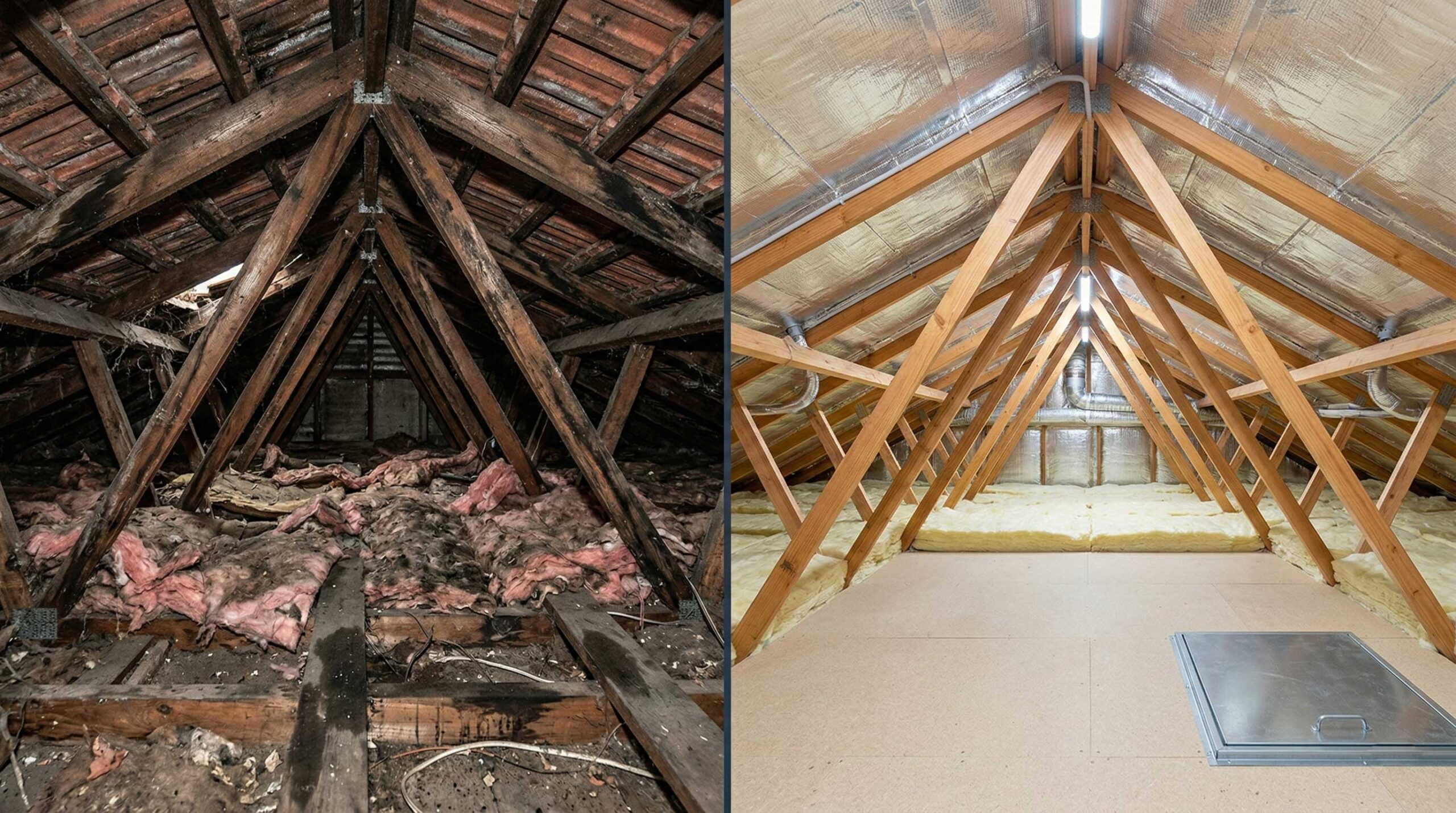
Every residential contractor has felt that specific pit in their stomach. It’s usually about three months after a job; you hear the phone ring, and on the screen, you see a client’s name. You just know. Either the top floor feels like a wood-fired sauna, or they’ve found a Rorschach test of black mould growing on their master suite ceiling.
In the Australian roofing game, these aren’t just minor hiccups; they’re business killers. Most of the time, the roof itself is fine. The tiles are straight, the sheets are screwed down tight, and the flashing is mint. The culprit is the invisible soup of stagnant air trapped in the roof cavity.
If you aren’t quoting ventilation as a standard line item, you’re leaving your flank wide open. You aren’t just selling a spinning metal hat; you’re selling an insurance policy against call-backs. Here is how to bake ventilation into your quotes so it actually sticks.
Table of Contents
When to Quote it (& When to Walk Away)
You’re standing on a ladder, head poked through the manhole, and the heat hits you like a physical punch to the face. That is your first sign. If it is 35 degrees outside and 65 degrees in the crawl space, the house is basically wearing thermals in the middle of an Australian summer.
But heat is the easy sell. The real ninja is winter moisture.
I once looked at a job in Sydney where the owner thought they had a massive roof leak. The insulation was sodden, and the timber battens were turning a fuzzy shade of grey. Turns out, the roof was watertight. So where was the problem? The three teenagers, each taking thirty-minute hot showers with a bathroom fan that vents hot, humid air straight into the ceiling space. No whirlybirds. No eaves. Just a giant, humid greenhouse effect happening six inches above their heads.
Add ventilation to the quote if:
- The client mentions the AC is “struggling” or running 24/7.
- You see “sweating” on the underside of metal sheets.
- The insulation looks compressed, damp, or smells like a wet dog.
- You’re installing new ceiling insulation (which actually traps more heat in the cavity).
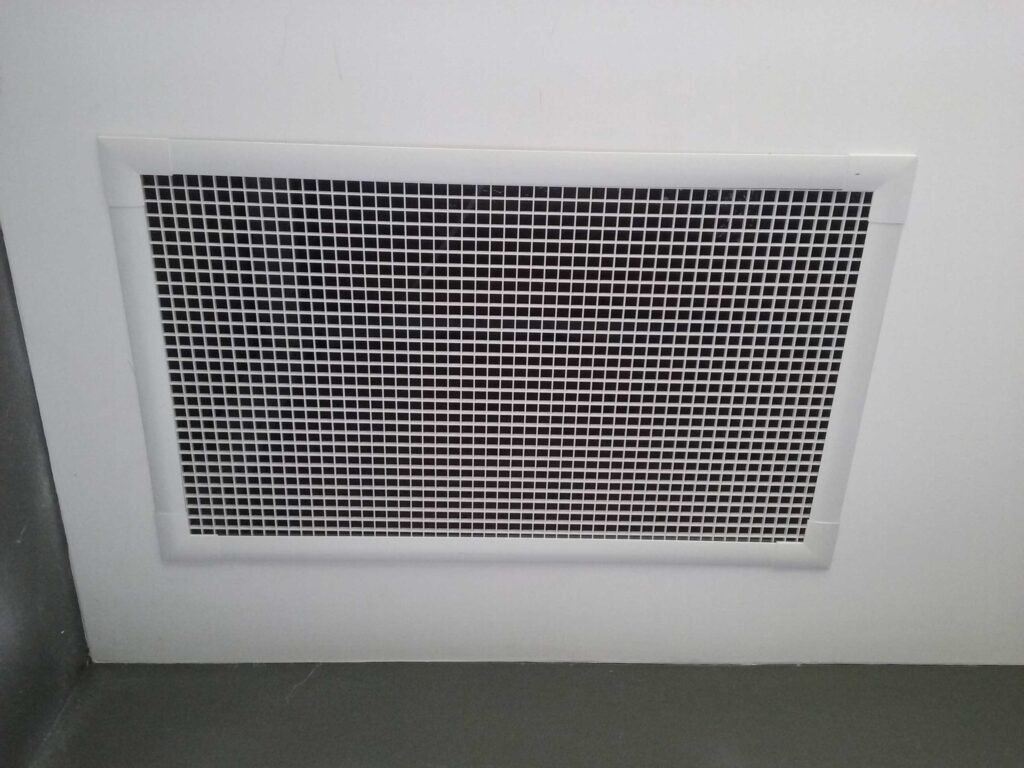
If the house has no eaves and the roof is a “sealed box” design, a single whirlybird might struggle. In those cases, tell the owner straight: “I can put the exhaust in, but we need an intake, or we’re just spinning wheels.“
The “No-Nonsense” Explainer for Homeowners
Don’t start talking about Pascals or fluid dynamics. They’ll lose interest, and their wallets will close. Keep it to the basics of how stuff actually moves.
“Look, hot air wants to go up. Always. If we don’t give it a door to leave through, it just sits here and cooks your ceiling.”
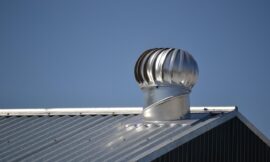
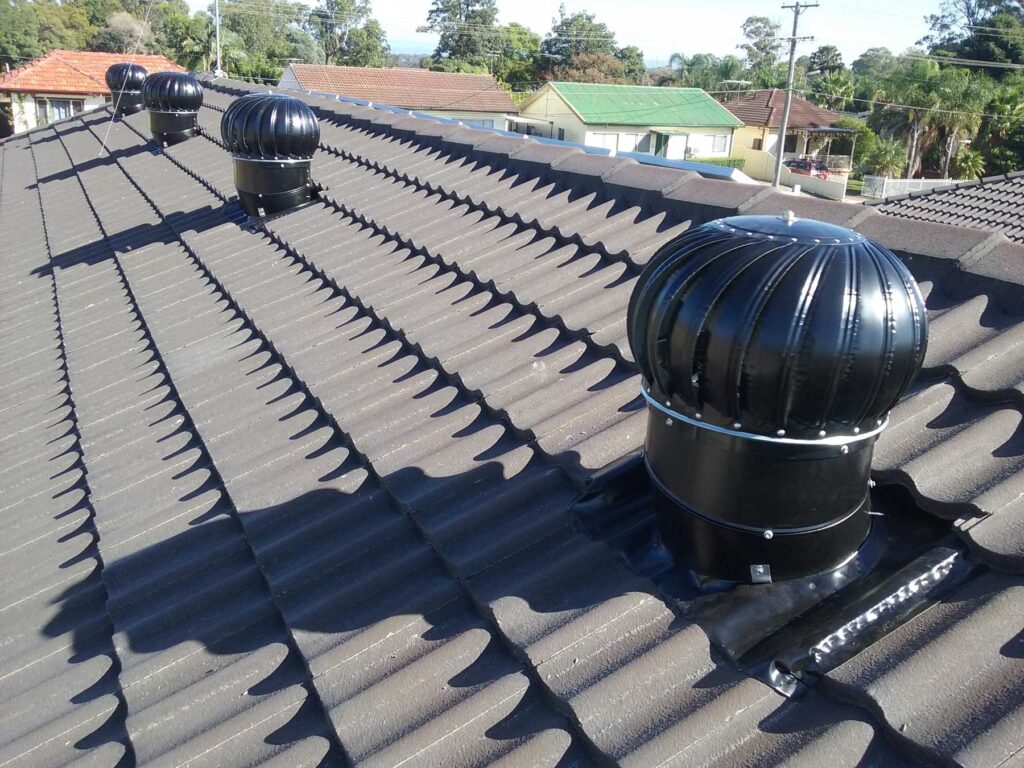
A whirlybird is a simple mechanical vacuum. When the wind catches those fins, it spins and sucks the stale air out. Even when there’s zero breeze, the heat rising naturally pushes the turbine, letting the house breathe. But you have to remind them: you can’t suck air out of a sealed bottle. You need air coming in from the eaves to push the old stuff out. It is a cycle, not a magic trick.
If they want more info, send them this link: How roof ventilation works.
The On-Site Checklist: Don’t Wing It
I’ve seen guys guess the number of vents from the driveway. Don’t be that guy. Take a couple of minutes to actually look at what you’ll be working with.
1. Material and Pitch
Are you dealing with concrete tiles, terracotta, or Colorbond? A corrugated metal roof needs a different flashing kit than a Trimdek profile. Also, check the pitch. If it is a steep 45-degree roof, your labour cost just went up. Don’t eat that cost because you forgot to look it up.
2. The Sarking Situation
Check the sarking (that silver foil stuff). If it is laid tight with no gaps, your ventilation is basically hitting a brick wall. You might need to cut some relief holes or look at specialised intake vents to get the air moving.
3. Strategic Placement
Don’t just stick them wherever is easiest to reach from the ladder.
- High Ground: Heat gathers at the ridge. Put the vents as high as possible.
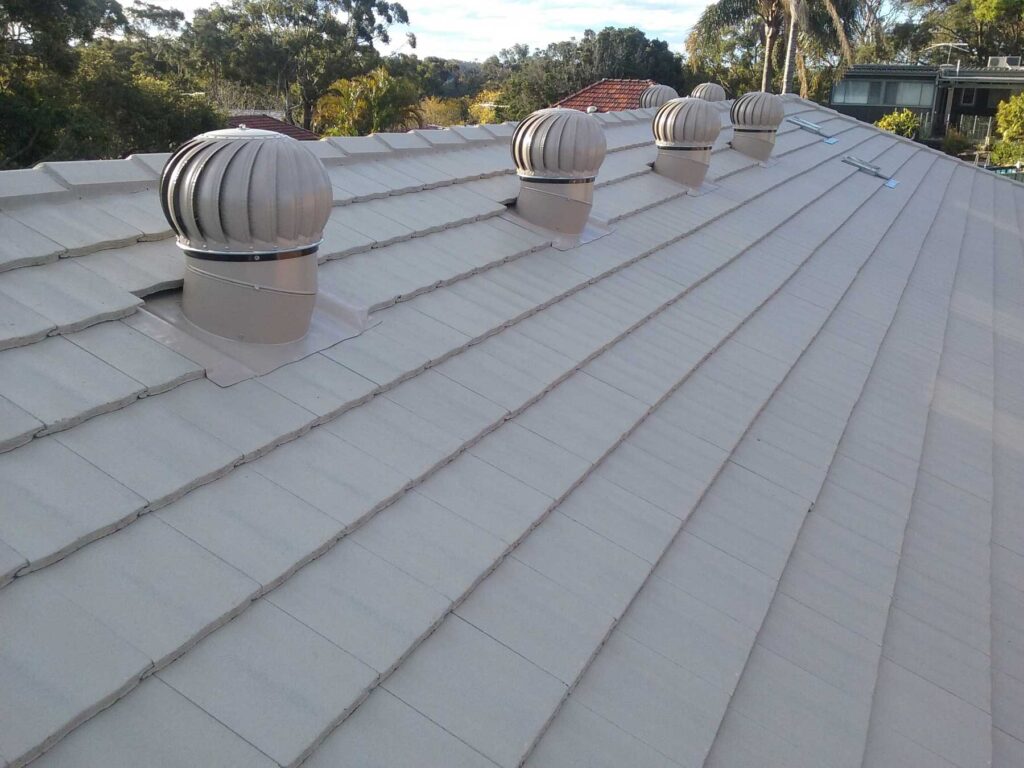
- Aesthetics: If the house has a “pretty” face, put the vents on the rear or side slopes. Space them out so they look intentional, not like a cluster of mushrooms.
- The Skeleton: Make sure you aren’t about to run a hole saw through a structural truss. It sounds obvious, but it happens more than people admit.
The “Don’t Make It Leak” Doctrine
The fastest way to lose a customer for life is a ceiling stain after the first thunderstorm.
The flashing is everything. For metal roofs, you have to turn up the pans of the sheets. For tiles, that flashing needs to be tucked deep under the course above and moulded perfectly to the profile. Silicone is a helper, but not the hero. If you are relying on a tube of goop to keep the water out, you’ve already lost. The mechanical overlap of the metal should do 90% of the work.
Why Homeowners Are Wrong About Winter
Most clients think whirlybirds are for summer. They’ll say, “Oh, I’ll just suffer through the heat, it’s fine.”
That’s when you pivot to the winter horror story.
Modern houses are airtight. We cook, we shower, we breathe. All that moisture travels up. When it hits a cold roof sheet in July, it turns into rain inside the house. I’ve seen insulation so heavy with water that it nearly collapsed the plasterboard.
Tell them: “In summer, these keep you cool and in winter, they keep your roof from rotting. You pick which one is more important.”
Passive vs Powered: Which One?
You’ll get the tech-savvy client asking about solar-powered fans.
Standard Whirlybirds:
- Pros: Zero running costs. Silent. They last for twenty years.
- Cons: They rely on wind or natural convection.
Solar/Powered Vents:
- Pros: They move a massive volume of air (CFM). Great for huge, sprawling roof cavities.
- Cons: They have motors. Motors eventually die. They can be noisy, especially if they’re right above a bedroom.
Usually, two or three high-quality wind-driven vents do the job for a standard 3-bedroom home. Don’t overcomplicate it unless the roof design is a nightmare.
The 30-Second Script to Close the Sale
When you hand over the quote, don’t just point at the price. Say this:
“I’ve included two high-flow vents in this quote. In the middle of January, they’ll stop your ceiling from acting like a radiator. More importantly, in winter, they’ll vent the moisture from your bathrooms, so you don’t end up with mould in the bedrooms. I’m installing these to the manufacturer’s spec, so the warranty is solid and the roof stays dry. It’s the cheapest way to protect the work I’m doing today.”
The Gear You Actually Need
If you want to look like a pro, have your documentation ready. Don’t scratch notes on a napkin.
- For the “How-To”: If you’re unsure about the flashing on a weird tile profile, check the Twista installation guides.
- For the Sceptic: Show them the warranty page. People love a guarantee.
- For the Specs: Check out the Twista product range to see which colour matches the client’s roof. A mismatched vent is an eyesore that they’ll remind you about every time they pull into the driveway.
At the end of the day, ventilation isn’t an extra. It is a fundamental part of a healthy roof that actually works. If you don’t quote it, someone else will, or even worse, nobody will, and you’ll be the one climbing back up there in six months to fix a mouldy ceiling for free.